
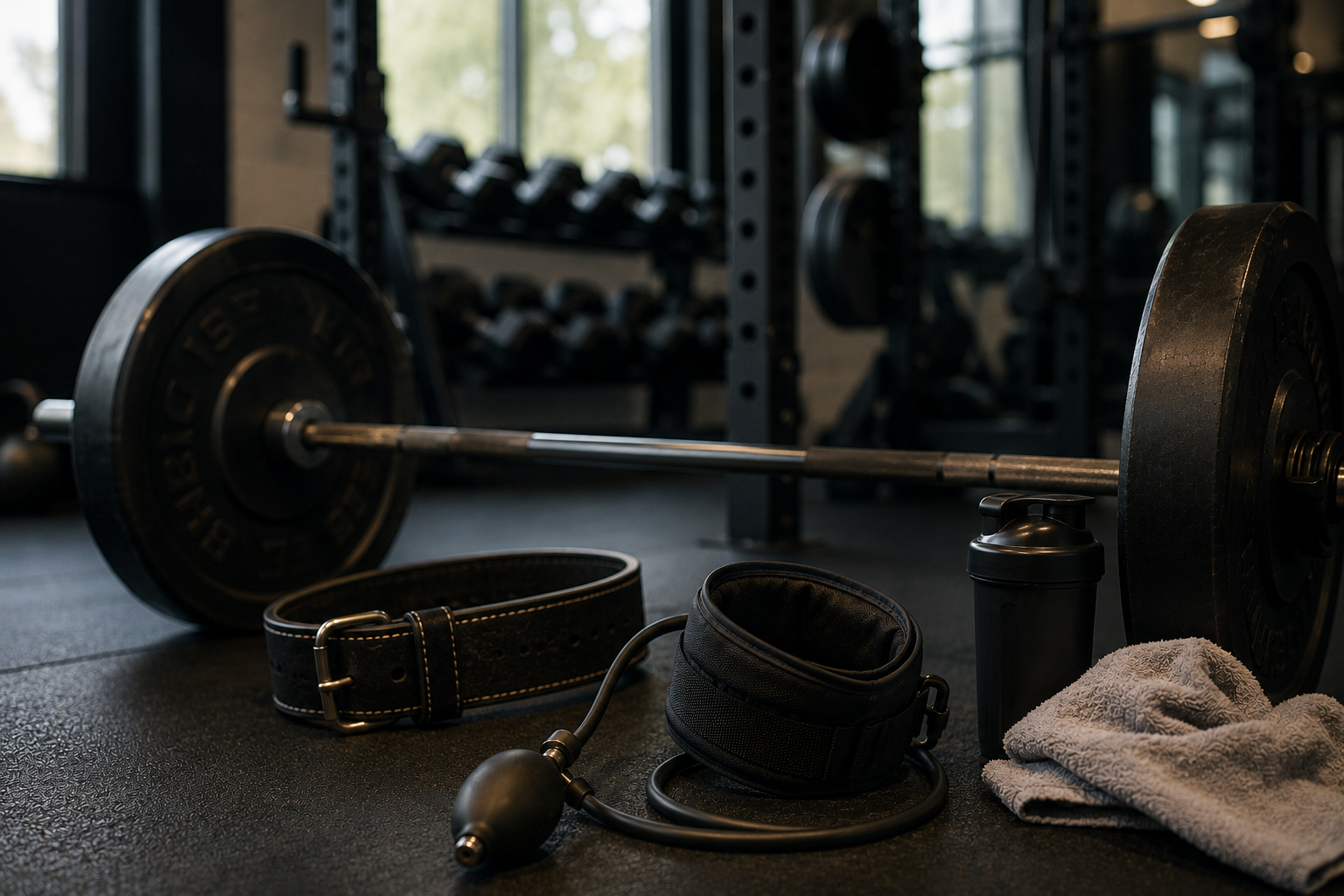
Franklin has a real lifting culture. Between the CrossFit boxes, powerlifting gyms, and physique competitors training across Williamson County, a lot of people here take strength training seriously, not just as exercise but as a long-term pursuit. That kind of consistency builds real results, but it also means we regularly see the same pattern at Amplify Health and Performance: a shoulder that flares up every time bench press volume increases, or a knee that has never quite felt right since a heavy squat cycle two years ago.
The good news is that most of what causes lifters pain is well understood, and it is rarely a reason to stop training. It is usually a reason to train differently for a while.
Why Lifters Get Hurt, Even When They Are Doing Everything Right
Research on weight training injuries consistently points to the same handful of areas: the shoulder, lower back, knee, elbow, and wrist. Strains, tendinitis, and sprains are the most common injury types, and the majority build up gradually rather than happening in one dramatic moment under the bar.
Interestingly, bodybuilding-style training actually has one of the lowest injury rates among strength sports, lower than powerlifting or Olympic weightlifting, largely because of the rep ranges and loading patterns involved. That does not mean lifters are in the clear. Years of consistent training on the same handful of movement patterns still create plenty of opportunity for a joint or tendon to get overloaded before anyone notices.
Where the Big Lifts Tend to Break Down
Bench Press and Shoulder Impingement
The shoulder is one of the most frequently injured joints in lifters, and the bench press is a common culprit. Repetitive pressing under load can irritate the rotator cuff and lead to impingement, bursitis, or tendinitis, especially when shoulder mobility and scapular control have not kept pace with the weight on the bar.
Deadlifts and the Low Back
The deadlift places significant demand on the lower back, and when spinal position breaks down under heavy load, that is where disc irritation and muscle strain tend to show up. This is one of the most common patterns we see, and it lines up closely with what we cover in our post on recurring back pain.
Squats and the Knee
Heavy squatting puts a real load through the knee, and patellar tendinopathy and general knee irritation are common in lifters who ramp up volume or intensity faster than their tendons can adapt to.
Elbow and Wrist Strain
Curls, pressing movements, and heavy grip work can irritate the tendons at the elbow and wrist over time, particularly in lifters who train the same movement patterns week after week without much variation.
Why the Same Joint Keeps Acting Up
If you have backed off a lift, felt better, and then had the same shoulder or knee flare up again once you added weight back, that is an extremely common pattern. Backing off reduces irritation, but it does not build the strength or correct the movement pattern that caused the overload in the first place. This is the same cycle we cover in our post on shoulder pain that keeps coming back after traditional PT, and it applies just as much to a joint that only bothers you under a barbell.
The Problem With Just Training Around It
The instinct when a joint starts bothering you mid-lift is usually to avoid loading it, work around the shoulder, favor the good knee, or drop a lift entirely. That approach makes sense in the short term, but it creates a frustrating trap: the muscle around the irritated joint needs to get stronger to support it properly, yet the heavy loading that normally builds that strength is exactly what the joint cannot tolerate yet.
How Blood Flow Restriction Training Solves the Loading Problem
This is the exact gap Blood Flow Restriction Training was designed to close, and it is a big part of how we train lifters at Amplify. A pneumatic cuff placed above the working muscle partially restricts blood flow during light-load exercise, creating the metabolic conditions that trigger real strength gains and muscle gains using a fraction of the weight normally required. Research has found that low-load BFR training can produce hypertrophy and strength gains comparable to those of traditional heavy resistance training, with meaningfully less joint stress. We break down exactly how this works for a specific joint in our post on recurring knee pain and Blood Flow Restriction Training.
For lifters, that means you do not have to choose between resting an irritated shoulder or knee completely and losing months of progress, or pushing through pain and making it worse. BFR lets you keep building real strength around the joint as it settles down, so you come out the other side stronger rather than detrained.
How Amplify Trains and Treats Lifters in Franklin, TN
Every visit at Amplify is one-on-one with a Doctor of Physical Therapy in our private, fully equipped gym, so your program is built around your specific lifts and goals rather than a generic protocol. If you want to see how that compares to a typical clinic, we have broken down one-on-one physical therapy versus traditional clinics in more detail. Depending on what is bothering you, your plan might include:
- A one-on-one movement assessment to find the mechanical cause behind your shoulder, back, or knee pain, not just the sore spot.
- Blood Flow Restriction Training to keep building strength around an irritated joint without the heavy loading that aggravates it.
Dry needling to release tight, overworked tissue in the shoulders, hips, or forearms, similar to what we cover in our dry needling versus massage breakdown.
- Focus shockwave therapy on chronic tendon pain, like long-standing patellar or elbow tendinopathy, that has not responded to rest alone.
- Red light therapy to support recovery between heavy training sessions.
We also build [PRE]habilitation programs for lifters and bodybuilders who want to address a weak link before it turns into a real injury, not just after.
When to See a Physical Therapist as a Lifter
It is time to get evaluated when:
- The same joint flares up every time you increase weight or volume on a specific lift.
- You have been modifying your training around a joint for more than a few weeks without real improvement.
- A joint feels unstable, catches, or is noticeably weaker on one side.
- You have been relying on pain relievers just to get through your training sessions.
Tennessee has direct access laws, so you can schedule an evaluation with a Doctor of Physical Therapy at Amplify without a physician referral first, which means you can get a real answer instead of guessing at what to change in your programming.
Frequently Asked Questions
Why do lifters get so much shoulder pain from bench press?
Bench press places repetitive stress on the shoulder, particularly the rotator cuff, and can lead to impingement or tendonitis when shoulder mobility and scapular control have not kept pace with the load being pressed. It is one of the most commonly injured areas in lifters for that reason.
What is Blood Flow Restriction training and how does it help lifters?
Blood Flow Restriction training uses a cuff placed above the working muscle to partially restrict blood flow during light-load exercise. This creates a metabolic stimulus similar to heavy lifting, allowing lifters to build real strength and muscle around an irritated joint using much lighter loads than they would normally need.
Can I keep lifting through an irritated shoulder or knee?
It depends on the severity. Mild, short-lived soreness is often fine to train through with adjustments to volume and form. Pain that is sharp, changes your lifting mechanics, or returns every time you load the joint is a sign to get it evaluated rather than to continue pushing through it.
Is bodybuilding riskier than other strength sports?
Actually, research suggests that bodybuilding-style training has one of the lowest injury rates among strength sports, generally lower than those of powerlifting and Olympic weightlifting. That said, years of repeating the same movement patterns can still lead to overuse issues in the shoulder, back, knee, elbow, or wrist over time.
Do I need a doctor’s referral to see a physical therapist in Tennessee?
No. Tennessee allows direct access to physical therapy, so you can schedule an evaluation with a Doctor of Physical Therapy at Amplify without seeing a physician first.
Does Amplify offer training programs for lifters and bodybuilders in Franklin, TN?
Yes. We work with lifters and bodybuilders using one-on-one physical therapy, Blood Flow Restriction Training, dry needling, and shockwave therapy, both to treat existing pain and to build [PRE]habilitation programs that address weak links before they become injuries.
If training has left you dealing with a shoulder, knee, or back that will not quite settle down, our team at Amplify Health and Performance in Franklin, TN, can help you find the actual cause and keep you training while you fix it. Reach out to start your intake and work one-on-one with a Doctor of Physical Therapy who understands what serious training actually demands from your body.

Leave A Comment