
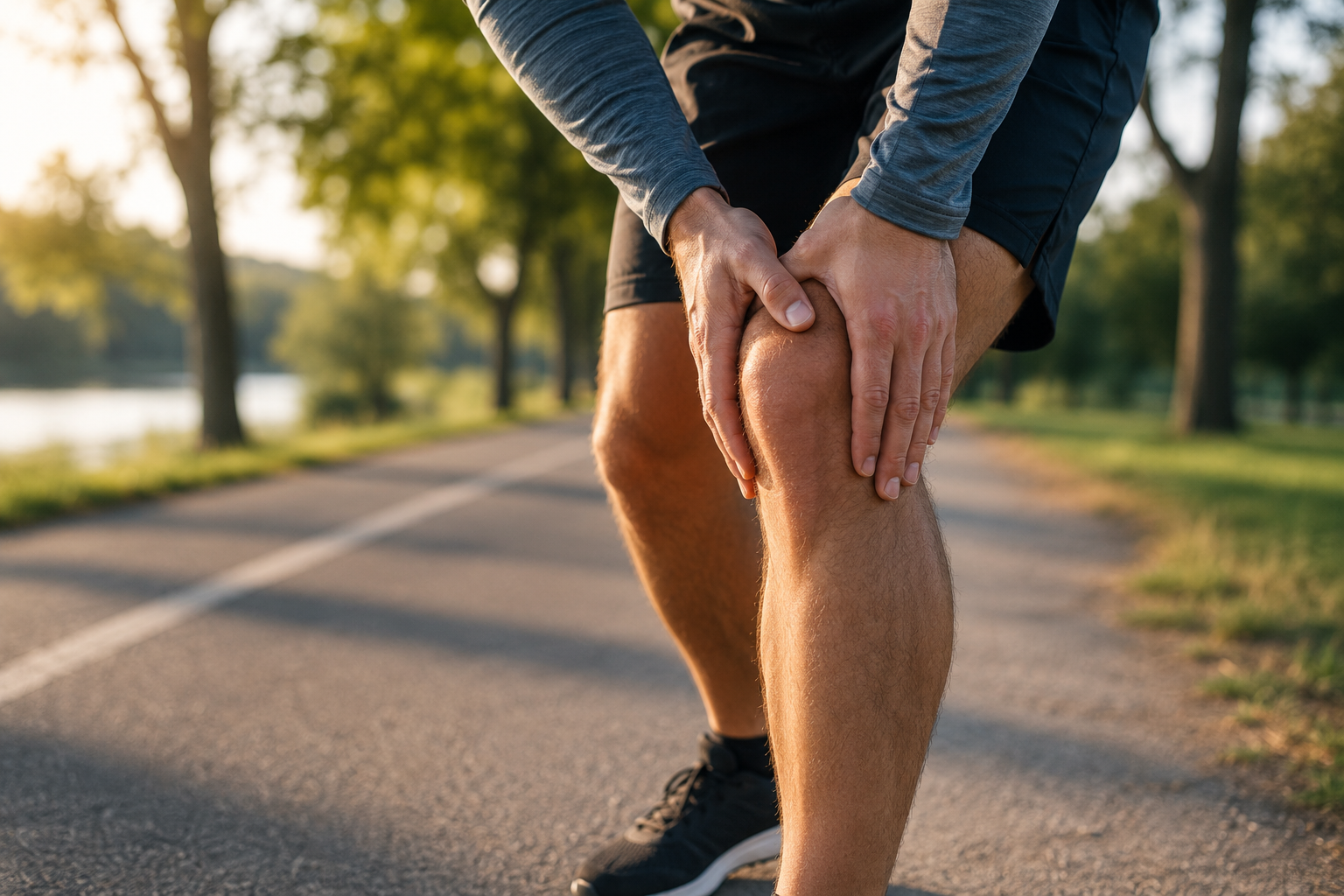
If your knee has been acting up, you’ve probably already lived this cycle. It flares up after a run on the Franklin Greenway, a long day on your feet, or a weekend of pickleball at Pinkerton Park. You back off, ice it, maybe take a week or two off entirely. It feels better. You ease back into activity, and within a few weeks, it’s right back where it started.
Most people respond to knee pain the same way: rest, ice, maybe a brace, and waiting it out. That approach works for a true short-term strain. But if this is the third or fourth time the same knee has flared up, rest isn’t the problem; it’s actually part of why the pain keeps returning.
Here’s what’s usually going on, and why rebuilding the joint’s tolerance matters more than protecting it.
What’s Actually Happening in a Recurring Knee
Most ongoing knee pain that isn’t from a structural injury, torn ligament, meniscus tear, advanced arthritis, comes down to one thing: the muscles supporting the joint, mainly the quadriceps and glutes, aren’t strong enough to handle the load you’re asking the knee to absorb. Every step, squat, or stride sends force through the knee. When the surrounding muscles can’t share that load, the joint itself takes more of it than it should.
That overload shows up as pain around or behind the kneecap, soreness going up or down stairs, or a dull ache after activity that used to feel easy. It’s not usually a sign of damage. It’s a sign the joint is being asked to do more than the muscles around it can currently support.
Why Rest Alone Doesn’t Fix It
Rest reduces irritation, which is exactly why the pain calms down. But rest also does something else: it lets the quad and glute muscles that were already too weak to support the knee get even weaker from inactivity. So when you return to your normal activity level, you’re asking an even less-prepared joint to handle the same load that overwhelmed it the first time.
This is the pattern behind most recurring knee pain:
The strength deficit never gets addressed. Rest takes the load off temporarily, but it doesn’t add strength. The muscles that needed to be stronger before the flare-up are no stronger after it.
Returning to activity re-creates the same overload. Once the pain fades, people understandably go back to running, lifting, or standing all day at the same level as before. Without added strength, the same mechanism that caused the first flare-up is still in place.
Traditional strengthening can be its own obstacle. The standard fix — squats, lunges, leg press — is the right idea, but heavy loading is often exactly what an irritated knee can’t tolerate yet. That leaves a frustrating gap: you need to get stronger, but the exercises that build strength fastest are the ones that aggravate the joint.
That gap is exactly what Blood Flow Restriction Training was designed to close. You can read more about how BFR works here.
What Actually Helps Resolve It
Building strength without heavy joint loading
Blood Flow Restriction Training uses a pneumatic cuff placed above the knee during light-load exercise, partially restricting blood flow to the working muscle. This creates the metabolic conditions that trigger real strength gains, similar to what you’d get from heavy lifting, using a fraction of the weight. For an irritated knee, that means the quad and glute strengthening it actually needs can happen without putting heavy compressive force through the joint itself.
Identifying why the load got there in the first place
A proper evaluation looks beyond the knee at hip strength, ankle mobility, and movement mechanics. Weakness or stiffness elsewhere in the chain often shows up as knee pain, because the knee ends up compensating for what the hip or ankle isn’t doing.
Progressing load gradually and deliberately
Once BFR has built a strength base without symptoms, training progresses toward normal loaded exercise in a sequence the joint can actually tolerate. Skipping straight back to full activity is one of the most common reasons knee pain returns after a few weeks of feeling fine.
Working with one clinician throughout
At Amplify, every visit is one-on-one with a Doctor of Physical Therapy. The same person who identifies the strength deficit and movement pattern behind your knee pain is the one adjusting your BFR settings and progressing your program session to session. Nothing gets lost between visits.
When to Stop Waiting It Out
A few signs your knee needs more than another round of rest:
- The pain has returned more than once after resting and easing back into activity
- Stairs, squatting, or kneeling consistently bother it, even when walking feels fine
- You’ve already tried rest, ice, and a brace without lasting change
- The discomfort shows up predictably after the same activities each time
None of these mean something is seriously wrong with the joint. They mean the muscles supporting it likely need to get stronger, and that rarely happens on its own.
Frequently Asked Questions About Recurring Knee Pain
Is Blood Flow Restriction Training safe? Yes, when supervised by a trained clinician. The cuff pressure and exercise load are set individually, and BFR is widely used in physical therapy specifically because it allows strengthening at lower loads than traditional training.
How is BFR different from just doing physical therapy exercises? Standard PT exercises still rely on enough resistance to stress the muscle. BFR achieves a similar strength stimulus with much lighter loads, which is the key advantage for a knee that can’t yet tolerate heavy resistance.
Do I need a referral to be seen for knee pain in Tennessee? No. Tennessee allows direct access to physical therapy, so you can schedule an evaluation without a physician referral first.
Will my knee pain come back after treatment? It’s much less likely if the underlying strength deficit is corrected rather than just resting through the current flare-up. That’s the difference between treating the symptom and treating the cause.
What if I’ve already done physical therapy and it didn’t help? That’s common, and it usually means the program didn’t build enough strength before progressing back to full activity, or the loading was too aggressive for the joint at the time. Pairing BFR with a gradual return-to-activity plan is often the missing piece for cases that didn’t respond before.
Ready to Stop the Cycle?
If your knee pain has come back more than once after rest, the fix probably isn’t another week off. Schedule an intake with Amplify Health and Performance and find out whether Blood Flow Restriction Training and a one-on-one plan can finally build the strength your knee needs to stay pain-free. If you’re still weighing your options, our guide to cash pay physical therapy covers what to expect.



Leave A Comment