
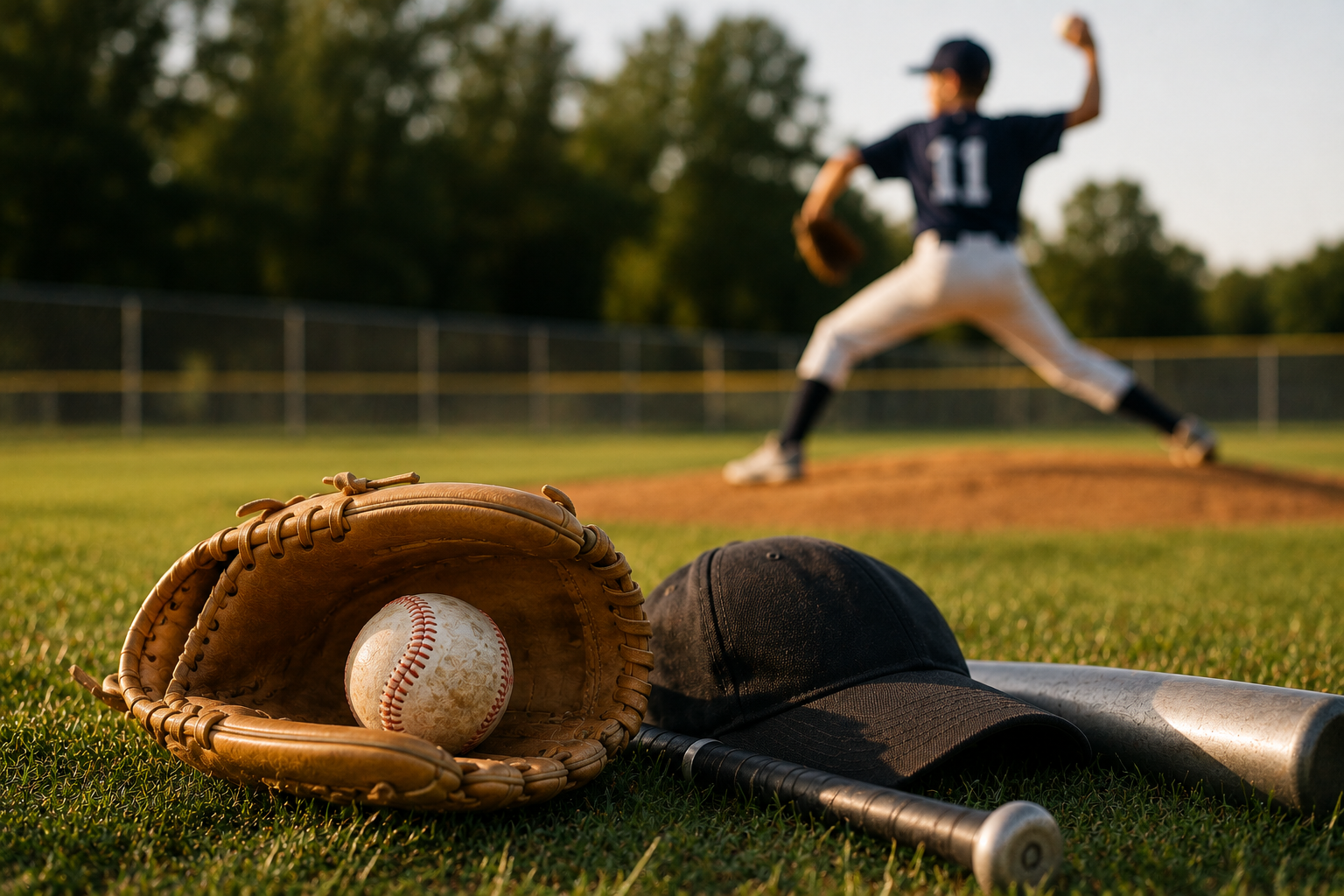
Franklin Baseball Club has been putting kids on the field since 1960, and today it serves more than 500 families and over 1,400 children through Cal Ripken and Babe Ruth leagues. Add in travel ball, showcase season, and school programs, and a lot of young arms in Williamson County are throwing a lot more than they used to. That is exactly what has us concerned, and what should have parents paying attention too.
The Youth Pitching Injury Trend
In the late 1990s, youth and high school players made up only about 10 percent of Tommy John surgeries, the procedure that reconstructs the elbow’s ulnar collateral ligament, at a leading orthopedic center. By 2021, that number had climbed to 52 percent. Today, more than half of all Tommy John surgeries performed nationally are on kids between 15 and 19 years old.
Year-round players are roughly two and a half times more likely to develop elbow problems than kids who take a real off-season. And despite years of public awareness campaigns, a 2021 study found that 90 percent of surveyed youth teams were not complying with established pitch count guidelines.
Why Throwing Is So Hard on a Young Arm
Throwing a baseball or softball at competitive speed places enormous stress on the elbow and shoulder, and a young athlete’s body is not built to absorb that stress the same way an adult’s is. Growth plates near the elbow and shoulder are weaker than the surrounding bone and ligament until they finish developing, which is why so many youth throwing injuries, like Little League elbow and Little League shoulder, are growth plate injuries rather than the ligament tears seen in older athletes.
A handful of factors consistently show up as the biggest risk factors for youth throwing injuries:
- Pitching while fatigued, which changes mechanics in ways that load the elbow and shoulder more than proper form would.
- Pitching on multiple teams at once, since pitch counts are rarely tracked across teams, leagues, and showcases combined.
- Playing catcher on days a player is not pitching, which adds significant additional throwing volume that often goes uncounted.
- Throwing breaking pitches, like curveballs and the increasingly common sweeper, before mechanics and growth plates are ready for that added stress.
- Playing year-round without a true throwing off-season.
Pitch Smart Guidelines: What the Numbers Actually Say
USA Baseball and Major League Baseball, working with the American Sports Medicine Institute, publish age-based pitch count and rest guidelines known as Pitch Smart. The daily maximums look like this:
- Ages 7 to 8: 50 pitches per day
- Ages 9 to 10: 75 pitches per day
- Ages 11 to 12: 85 pitches per day
- Ages 13 to 16: 95 pitches per day
- Ages 17 to 18: 105 pitches per day
Required rest days scale with how many pitches were thrown, up to four full days of rest after a high pitch count outing, and no pitcher should appear as a pitcher on three consecutive days, regardless of pitch count. The guidelines are well established. The challenge, as the compliance research shows, is actually following them when a player is on more than one team.
It Is Not Just Pitchers, and Not Just Baseball
Softball’s windmill pitching motion creates a different stress pattern than baseball’s overhand throw, loading the shoulder more than the elbow, but the underlying problem is the same: repetitive high-velocity motion without enough recovery. Catchers, infielders with strong arms, and position players who throw hard on every play are also at real risk, even if no one is tracking their throw count the way a pitcher’s is tracked. The same overuse cycle we cover in our post on shoulder pain that keeps coming back after traditional PT applies here, too, just compressed into a much shorter timeline in a still-developing body.
What Parents and Coaches Can Do
- Track total throwing volume across every team your athlete plays for, not just the pitch count from a single game or league.
- Actually enforce rest days between outings, even when a coach or tournament schedule makes that inconvenient.
- Delay breaking pitches until a coach or physical therapist confirms mechanics and physical readiness support them.
- Take arm soreness seriously. A young athlete who is sore in the same spot after every outing is showing a textbook overuse pattern, not just normal fatigue.
- Build in a genuine throwing off-season, ideally two to three months where the arm is not throwing competitively at all.
How Amplify Supports Youth Throwers in Franklin, TN
Every evaluation at Amplify is one-on-one with a Doctor of Physical Therapy, which matters for throwing athletes because subtle mechanical breakdowns are easy to miss in a rushed, high-volume clinic setting. If you want to understand that model better, we have broken down one-on-one physical therapy versus traditional clinics in more detail. For young throwers, that typically includes:
- A throwing mechanics and movement assessment to catch inefficient patterns before they become an overuse injury.
- Arm care and shoulder or elbow strengthening programs built around the specific demands of pitching, catching, or hard-throwing positions.
- Guidance on throwing volume, rest, and off-season planning in coordination with parents and coaches.
- Evaluation and treatment for existing arm pain, including a clear plan for a safe, gradual return to throwing.
When to See a Physical Therapist for a Young Thrower
It is worth getting evaluated when:
- Arm pain shows up during or consistently after throwing, rather than resolving within a day or two.
- You notice a drop in velocity, accuracy, or arm slot that was not there before.
- Your athlete changes their throwing motion to avoid pain in a specific spot.
- Soreness has been managed with rest before, but keeps returning once throwing resumes.
Tennessee has direct access laws, so you can schedule an evaluation with a Doctor of Physical Therapy at Amplify without a physician referral first, which means you can get real answers before a small issue turns into a season- or career-ending injury.
Frequently Asked Questions
Why are Tommy John surgeries increasing in youth baseball players?
The rise is closely tied to year-round play, pitching on multiple teams without combined pitch-count tracking, throwing breaking pitches too early, and inconsistent enforcement of pitch-count and rest guidelines. Youth and high school athletes now account for more than half of all Tommy John surgeries performed nationally.
What is Little League elbow, and how is it different from a UCL tear?
Little League elbow is stress on the growth plate at the inner elbow, common in younger throwers whose bones are still developing. An UCL tear, the injury repaired by Tommy John surgery, involves the ligament itself and tends to occur in older adolescents and young adults whose growth plates have already closed.
What are the Pitch Smart guidelines?
Pitch Smart is a set of age-based daily pitch count limits and required rest day recommendations developed by USA Baseball, Major League Baseball, and the American Sports Medicine Institute to reduce arm injuries in young throwers. They range from 50 pitches per day for 7 and 8 year olds up to 105 pitches per day for 17 and 18 year olds, with rest requirements that scale based on pitches thrown.
Is softball safer than baseball for the arm?
Softball’s underhand windmill motion creates a different stress pattern than baseball’s overhand throw, generally placing more load on the shoulder than the elbow. It is not inherently safer, since the same overuse risk applies whenever a young athlete throws at high volume without adequate rest.
Do I need a doctor’s referral for my child to see a physical therapist in Tennessee?
No. Tennessee allows direct access to physical therapy, so you can first schedule an evaluation with a Doctor of Physical Therapy at Amplify without a physician referral.
Does Amplify work with youth baseball and softball players in Franklin, TN?
Yes. We work with young throwers on mechanics assessments, arm care programs, throwing volume guidance, and recovery from shoulder or elbow pain, coordinating with parents and coaches along the way.
If your young pitcher, catcher, or thrower has been dealing with arm pain that keeps coming back, our team at Amplify Health and Performance in Franklin, TN, can help you understand what is actually happening and build a plan to protect their arm long term. Reach out to start an intake and work one-on-one with a Doctor of Physical Therapy who takes arm care seriously.





Leave A Comment