
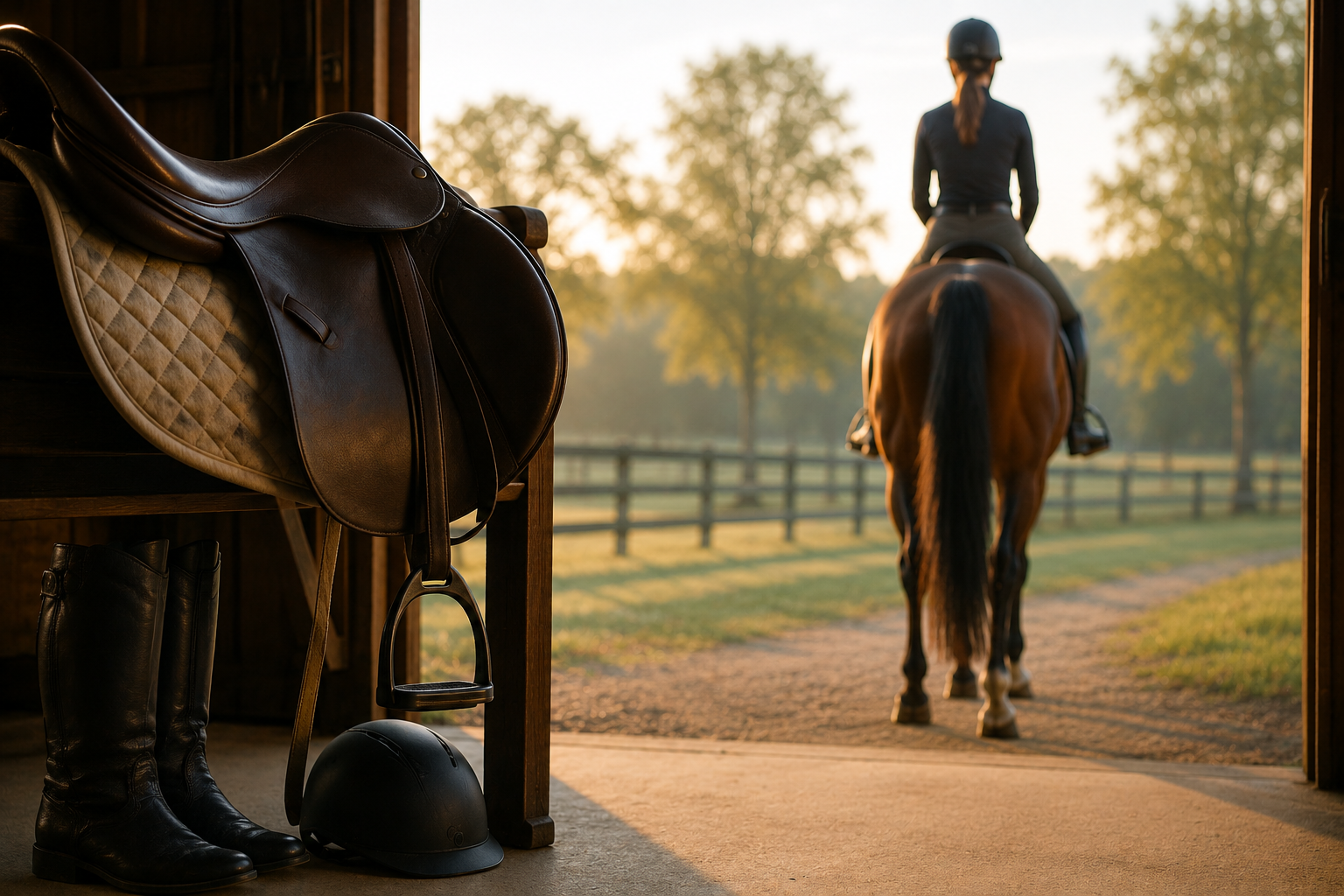
Franklin sits in the middle of some of the best horse country in Tennessee. Between Brownland Farm, Gait Keeper Farm, Tap Root Equestrian, and the dozens of private farms scattered across Williamson County, riding is woven into daily life here in a way it is not in most places. It also means we see a specific and fairly predictable pattern of pain and dysfunction walk into Amplify Health and Performance: riders dealing with a low back that never fully calms down, or a hip that feels tight and weak on one side, no matter how much they stretch.
Riding asks a lot of the body, and most of what it asks for is never trained off the horse. If you compete, ride recreationally, or spend your weekends in the barn, here is why riding-related pain shows up and what actually helps.
Why Riders Need More Than Time in the Saddle
It is worth separating two very different things when it comes to equestrian health. The first is acute injury from a fall or a kick, which is a real risk in this sport. Research presented through the American Orthopedic Society for Sports Medicine notes that roughly one in five riders will sustain a serious injury during their riding career, and horseback riding is a leading cause of sports-related traumatic brain injury in the United States. A properly fitted helmet and safety vest matter, and any suspected head injury or fracture needs emergency medical attention, not physical therapy.
The second, and the one physical therapy is built for, is the slow, cumulative strain that comes from asking the body to hold a very specific, very demanding position for long periods, ride after ride, often without any off-horse training to support it. This is where most of the pain we treat in riders actually comes from, and it is almost entirely preventable.
The Physical Demands of Riding
The pelvis is the foundation of a rider’s position. A stable, level pelvis lets you absorb the horse’s movement through your hips and core instead of your lower back, stay balanced through transitions, and communicate clearly with the horse. When that stability is missing, the body compensates, and those compensations are exactly what we see show up as pain.
Research on riders has found that novice and intermediate riders tend to absorb shock mostly through the lumbar spine rather than the hips and pelvis, which puts both the rider’s back and the horse’s way of going at risk. Most riders also carry some degree of side-to-side imbalance, often tied to handedness or an old injury, showing up as a weak hip stabilizer on one side and tightness on the other. Left unaddressed, that imbalance tends to show up as a collapsed hip, an uneven seat, or a shoulder that sits higher on one side.
The upside is that this is trainable. One study found that an eight-week core-strengthening program improved riders’ symmetry in the sit trot and even increased their horses’ stride length, which is a good reminder that a rider’s fitness affects the horse as much as it affects the rider.
Common Issues We See in Riders
Low Back Pain
This is, by far, the most common complaint among the riders we see. It usually comes from absorbing the horse’s motion through the lumbar spine instead of the hips and pelvis, which places repetitive strain on the lower back ride after ride.
Hip Asymmetry and One-Sided Tightness
Most riders have a stronger, more mobile side and a weaker, tighter side. Over time, this shows up as a collapsed hip, uneven weight in the stirrups, or a seat that never quite feels centered, even to an experienced rider.
Core and Postural Fatigue
Holding a tall, stable riding position for an hour or more takes real postural endurance. Riders who fatigue partway through a ride often fall back into compensations, like gripping with the hands or arms, that can lead to shoulder and wrist strain over time.
Falls and Acute Trauma
Falls happen, even to experienced riders, and they deserve to be taken seriously. If you have a suspected concussion, fracture, or significant trauma, you need emergency evaluation first. Once you are medically cleared, physical therapy can play an important role in safely rebuilding strength, confidence, and symmetry before you get back in the saddle.
Why the Same Issues Keep Coming Back
Riding lessons make you a better rider, but they rarely correct the underlying strength or mobility imbalance causing your pain, since the horse’s motion tends to reinforce whatever pattern you already have rather than fix it. This is the same reason rest alone does not resolve most pain. We see the same thing across almost every sport we treat, including in our post on recurring back pain. Without targeted off-horse work, the compensation pattern stays in place, and the pain simply comes back the next time you ride.
How to Prevent Riding-Related Pain
Most of the pain we see in riders responds well to a fairly focused approach.
- Train your core off the horse. Planks, anti-rotation work, and hip strengthening build the stability that supports your position instead of your lower back doing the work.
- Address your specific side-to-side imbalance. Generic exercise programs often miss this because the asymmetry varies for every rider.
- Build postural endurance, not just strength. Being able to hold a tall, stable position for a full lesson or a long trail ride matters as much as raw strength.
- Cross-train. Activities that build hip mobility and core control outside of riding help reinforce good position instead of just adding more hours in the saddle.
- Get a movement assessment built around riding. A generic personal trainer or a general exercise routine will not necessarily identify the specific pattern causing your pain.
How Amplify Health and Performance Supports Riders in Franklin, TN
Every visit at Amplify is one-on-one with a Doctor of Physical Therapy, so we start by identifying your specific asymmetry and movement pattern rather than handing you a generic program. If you want to see how that compares to a typical clinic, we have broken down one-on-one physical therapy versus traditional clinics in more detail. Depending on what you need, your plan might include:
- A one-on-one movement assessment to identify your side-to-side imbalance and postural weaknesses.
Dry needling to release tight hip flexors, glutes, or low back muscles, similar to what we cover in our dry needling versus massage breakdown.
- Blood flow restriction training to rebuild strength safely, including after a fall or injury.
- Red light therapy to support tissue recovery between sessions.
We also build equestrian-specific [PRE]habilitation programs designed around the actual demands of riding, whether you compete regularly or ride recreationally on the weekends. If you split your time between the barn and other sports, our [PRE]habilitation programs address a similar range of overuse patterns for players who also play pickleball.
See our guide to pickleball injuries in Franklin for more on that overlap.
When to See a Physical Therapist as a Rider
It is time to get evaluated when:
- Low back or hip pain shows up consistently after riding or lingers between rides.
- You or your instructor notices a persistent asymmetry in your position that does not improve with lessons alone.
- You are returning to riding after a fall and want to rebuild strength and confidence safely.
- You have been relying on stretching or foam rolling just to get through a normal week of riding.
Tennessee has direct access laws, so you can schedule an evaluation with a Doctor of Physical Therapy at Amplify without a physician referral first, which makes it easy to get answers quickly.
Frequently Asked Questions
Why do horseback riders get so much lower back pain?
Low back pain in riders is usually caused by absorbing the horse’s motion through the lumbar spine instead of the hips and pelvis. When the core and hips are not stable enough to do that job, the lower back takes on repetitive strain that builds up over time.
What is equestrian [PRE]habilitation?
Equestrian [PRE]habilitation is a training and physical therapy approach built specifically around the physical demands of riding, like core stability, pelvic symmetry, and postural endurance. Instead of waiting for pain or injury, it works to correct the imbalances that cause them in the first place.
Can my core strength really affect how my horse moves?
Yes. Research has shown that improving a rider’s core strength and symmetry can enhance stride length and movement quality in the horse, since an unstable or asymmetrical rider changes how the horse must balance and move underneath them.
Is riding a good enough workout on its own?
Riding builds a specific kind of strength and endurance, but it usually is not enough on its own to correct an existing imbalance, since the horse’s motion tends to reinforce whatever pattern you already have rather than fix it. Off-horse core and hip work is what actually addresses the root cause.
Do I need a doctor’s referral to see a physical therapist in Tennessee?
No. Tennessee allows direct access to physical therapy, so you can schedule an evaluation with a Doctor of Physical Therapy at Amplify without seeing a physician first.
Does Amplify Health and Performance offer equestrian-specific physical therapy in Franklin, TN?
Yes. Equestrian [PRE]habilitation is one of our specialties, and we regularly work with riders on core stability, hip and pelvic symmetry, and recovery from riding-related pain or falls using one-on-one physical therapy, dry needling, and blood flow restriction training.
If riding has left you dealing with a low back or hip that never quite settles down, our team at Amplify Health and Performance in Franklin, TN, can help you find the actual cause and build a plan around it, not just manage it. Reach out to start your intake and work one-on-one with a Doctor of Physical Therapy who understands what riding actually demands from your body.




Leave A Comment