
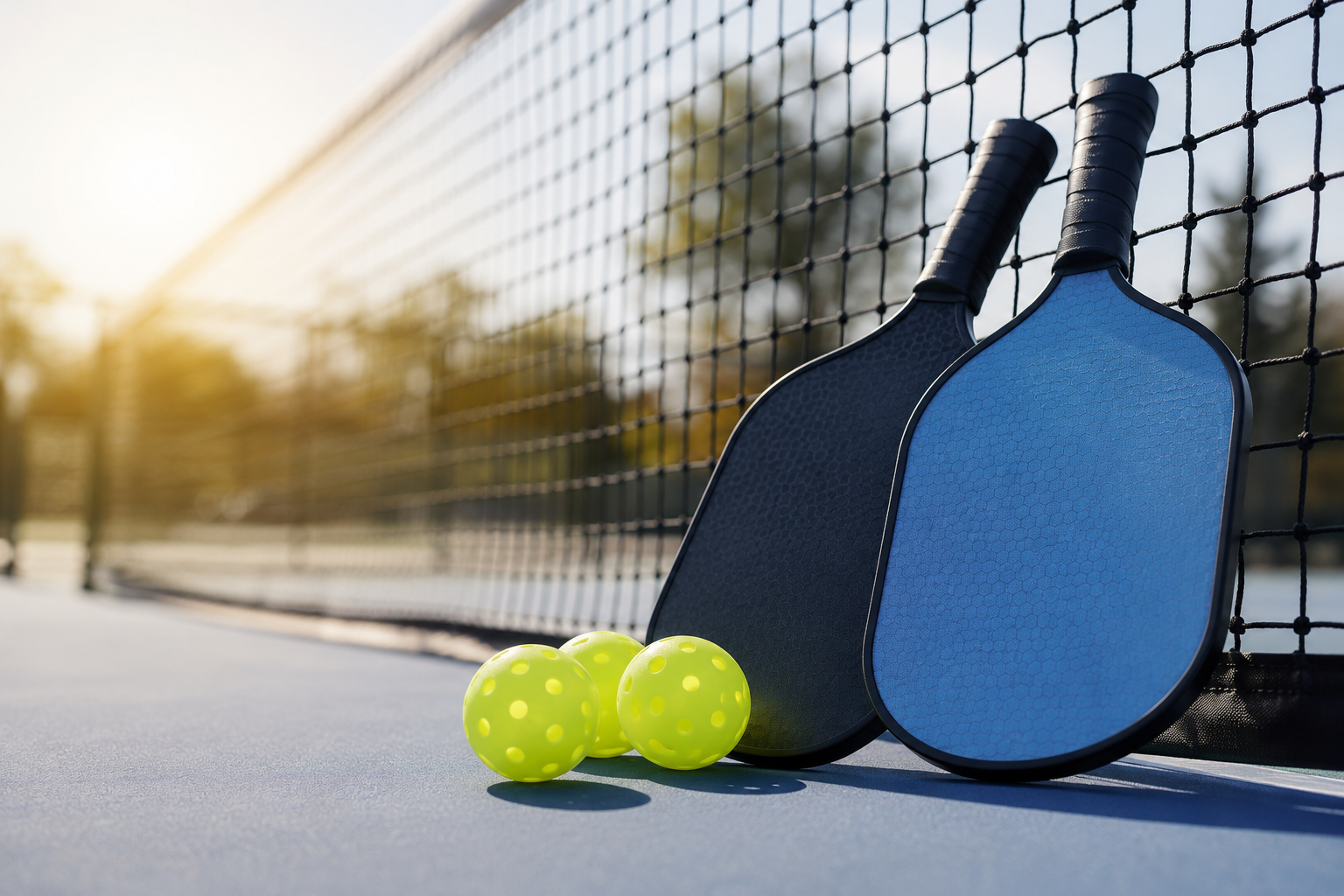
Franklin has become a pickleball town. Between Williamson County Parks and Rec courts, private club leagues, and weekend meetups, it feels like everyone from college students to retirees has picked up a paddle in the last couple of years. That is a great thing for your heart and your social calendar. It is also why we have been seeing a steady stream of pickleball injuries walk through our doors at Amplify Health and Performance.
Pickleball has been the fastest-growing sport in the country for several years running, with tens of millions of Americans now playing regularly. Along with that growth has come a real rise in injuries, from sore elbows to torn ACLs. If you have started feeling a new ache after a match, or you are trying to figure out how to keep playing without getting hurt, here is what you need to know.
Why Pickleball Injuries Are Becoming So Common
Pickleball looks easy. The court is small, the ball is light, and the learning curve is quick, so people jump in without much of a warm up or any real conditioning. That is exactly the problem. Dr. Elizabeth Matzkin, a sports medicine surgeon with Mass General Brigham, has pointed out that players often assume injuries are rare in a “casual” sport like pickleball, when in reality any athlete without the right strength, balance, and prevention habits is at risk.
A few things make pickleball especially hard on the body:
- Quick, short, side to side movements that stress the ankles, knees, and hips more than a steady jog or bike ride would.
- Repetitive underhand serves and wrist flicks that overload the same small tendons in the elbow and wrist match after match.
- A player base that skews older or less conditioned, since pickleball attracts people who have not played a competitive racket sport in years.
- Sudden stops, lunges, and paddle collisions that can cause an acute injury even in a friendly weekend game.
The result is a sport that is genuinely great exercise, but one that can catch your joints and tendons off guard if your body has not been prepared for it. It is a similar story to what we see with runners in Franklin who deal with the same injuries over and over: a repetitive sport, a body that has not been conditioned for its specific demands, and an injury that was probably preventable.
The Most Common Pickleball Injuries We See in Franklin
Most pickleball injuries fall into one of two buckets: overuse injuries that build up slowly over weeks of play, and acute injuries that happen in a single bad step or fall. Here are the ones we treat most often.
Pickleball Elbow (Tennis Elbow and Golfer’s Elbow)
The repetitive gripping and wrist snap involved in serving and dinking puts constant strain on the tendons around the elbow. Pain on the outside of the elbow is usually tennis elbow, and pain on the inside is golfer’s elbow. Either way, it is a classic overuse injury, and it rarely gets better just by playing through it.
Ankle Sprains and Achilles Strain
The quick lateral shuffles and sudden direction changes that pickleball demands put a lot of stress on the ankle and Achilles tendon. A rolled ankle is one of the most common acute injuries on the court, and Achilles tightness or strain tends to build up gradually in players who skip their warm up.
Shoulder Pain and Rotator Cuff Irritation
Overhead shots and repeated serving motions can irritate the rotator cuff, especially in players who have not done any shoulder specific strength work in years. This usually shows up as a dull ache that gets worse the longer you play.
Knee Injuries: Meniscus Tears and ACL Sprains
Pivoting, lunging for a drop shot, or planting awkwardly to change direction can strain or tear the meniscus, and in more serious falls or cutting movements, the ACL. These are the injuries that tend to need the most structured rehab to fully recover from. If surgery ends up being part of your recovery, our ACL recovery timeline guide walks through what to expect at each stage.
Wrist Fractures
Falls account for a large share of pickleball related emergency room visits, and a fall onto an outstretched hand is a common way to break a wrist. This risk is higher for older players, particularly women with lower bone density, which is one more reason balance and strength training matter as much as skill on the court.
Why the Same Pickleball Injuries Keep Coming Back
If you have dealt with elbow, shoulder, or knee pain before and it flared right back up once you returned to the court, you are not imagining it. Resting an injury without addressing the underlying strength, mobility, or movement pattern that caused it almost always leads to a repeat injury. We see this pattern constantly, and it is the same reason people struggle with recurring pain outside of pickleball too. Treating the sore spot alone rarely solves the problem for good.
We have written about this pattern before, including why knee pain keeps coming back, why shoulder pain returns after traditional PT, and why back pain flares back up after rest alone. Pickleball players run into the same cycle, just in a different joint.
A tight hip or a weak shoulder blade muscle can quietly overload the elbow or knee for months before it finally becomes painful enough to notice. That is why a real recovery plan looks at the whole kinetic chain, not just the joint that hurts today.
How to Prevent Pickleball Injuries Before They Sideline You
Most pickleball injuries are preventable with a few consistent habits.
- Warm up with dynamic movement. Save static stretching for after you play, and use the first few minutes on the court for light footwork, lunges, and arm circles instead.
- Use the right equipment. A paddle grip that is too big or small, or shoes without enough lateral support, forces your hands, wrists, and ankles to compensate.
- Cross train and build strength. Core work, squats, lunges, and deadlifts build the stability that protects your joints during quick direction changes.
- Pay attention to your form. Poor mechanics on serves and overhead shots put unnecessary strain on the elbow and shoulder over time.
- Do not ignore early soreness. A little stiffness that shows up after every match is your body asking for attention before it becomes a real injury.
How Amplify Health and Performance Treats Pickleball Injuries in Franklin, TN
At Amplify, every visit is one-on-one with a Doctor of Physical Therapy, so your treatment plan is built around your body, your game, and your goals rather than a generic protocol. If you want to see how that compares to a traditional physical therapy clinic, we have broken that down too. Depending on your injury, treatment might include:
- One-on-one physical therapy to rebuild strength, mobility, and movement patterns so the injury does not return.
- Dry needling to release the trigger points and tight muscle tissue that often sit behind stubborn elbow, shoulder, and calf pain.
- Focus shockwave therapy for chronic tendon pain, like long-standing tennis elbow or Achilles tendinitis, that has not responded to rest alone.
- Blood flow restriction training to help you rebuild strength safely while an injury is still healing, without overloading the joint.
- Red light therapy to support tissue recovery between sessions.
We also build [PRE]habilitation programs specifically for pickleball players, so if you are new to the sport or ramping up how often you play, we can help you prepare your body before an injury happens instead of after.
When to See a Physical Therapist for a Pickleball Injury
Minor soreness after a match is normal and usually responds well to rest, ice, and a lighter schedule for a few days. It is time to have it looked at when:
- Pain lasts more than a few days or keeps coming back every time you play.
- You notice swelling, bruising, or trouble bearing weight.
- A joint feels unstable, weak, or like it might give out.
- You have been relying on ibuprofen or pain gels just to get through games.
Tennessee has direct access laws, which means you can come straight to a physical therapist for an evaluation without getting a physician referral first. That makes it easy to get in quickly and start addressing an injury before it turns into a longer layoff from the sport.
Frequently Asked Questions
Is pickleball actually hard on your body?
It can be. Pickleball is genuinely good exercise, but the quick direction changes, repetitive wrist and elbow motion, and overhead shots put real stress on joints and tendons, especially if you have not trained for lateral movement in a while. Most injuries come from jumping into frequent play without first building up strength and conditioning.
What is pickleball elbow?
Pickleball elbow is not a distinct medical diagnosis. It is a nickname for tennis elbow, or golfer’s elbow, that pickleball players commonly develop from the repetitive gripping and wrist snap used in serves and dinks. Pain on the outside of the elbow points to tennis elbow, and pain on the inside points to golfer’s elbow.
Can I keep playing pickleball with a minor injury?
It depends on the injury. Mild, short-lived soreness is usually fine to play through with extra warm-up and attention to form. Anything involving swelling, sharp pain, joint instability, or pain that returns every time you play is a sign to get evaluated before you keep pushing through it, since playing on an unaddressed injury is one of the main reasons these problems become chronic.
Do I need a doctor’s referral to see a physical therapist in Tennessee?
No. Tennessee allows direct access to physical therapy, so you can schedule an evaluation with a Doctor of Physical Therapy at Amplify without seeing a physician first.
How long does it take to recover from a pickleball injury?
It varies widely depending on the injury. A mild ankle sprain might improve in a couple of weeks with the right rehab, while a tendon issue like tennis elbow or a knee injury such as a meniscus tear can take several weeks to a few months of consistent physical therapy to fully resolve. A one-on-one evaluation is the best way to get a timeline specific to your injury.
Does Amplify Health and Performance treat pickleball players in Franklin, TN?
Yes. Pickleball is one of our [PRE]habilitation specialties, and we regularly treat pickleball-related elbow, shoulder, ankle, and knee injuries using one-on-one physical therapy, dry needling, shockwave therapy, and blood flow restriction training.
If pickleball has left you dealing with an ache that will not quit, our team at Amplify Health and Performance in Franklin, TN, can help you figure out what is really going on and build a plan to get you back on the court stronger than before. Reach out to start your intake and work one-on-one with a Doctor of Physical Therapy who gets it.

Leave A Comment